
What I Wish I Knew the Day I Was Diagnosed With Cancer
A cancer diagnosis can feel overwhelming and unreal. Here are the things many patients wish they had known on the first day after hearing the words, “You have cancer.”
NEWLY DIAGNOSED
J.D. Darrah
5/18/20262 min read
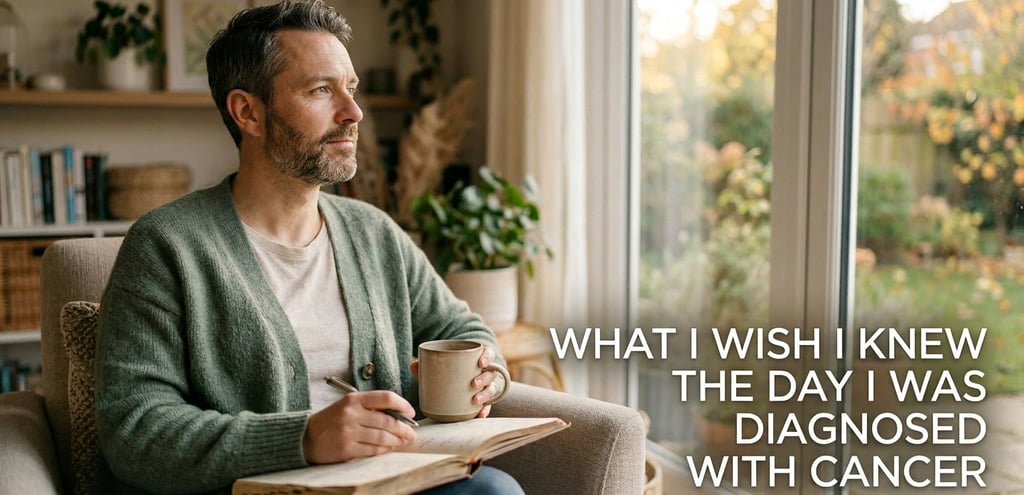

Hearing the words “You have cancer” changes everything.
For many people, time seems to stop during that conversation. You may remember tiny details — the room, the doctor’s expression, the sound of a keyboard — while barely hearing the information that came afterward.
You may feel shocked, numb, terrified, angry, confused, or strangely calm. There is no “correct” reaction.
One of the hardest parts of a new cancer diagnosis is that suddenly everyone expects you to make decisions while you are still trying to process what just happened.
If you were recently diagnosed, here are some things many cancer patients wish they had known on day one.
You Do Not Need to Learn Everything Immediately
One of the first instincts many people have is to search the internet nonstop.
That usually leads to information overload.
You may find statistics that are outdated, worst-case stories on forums, or medical terminology that increases anxiety rather than helping.
Cancer treatment is incredibly individualized. Two people with the same cancer type can have completely different treatment plans, outcomes, and experiences.
You do not have to become an expert overnight.
Right now, focus on:
Understanding your diagnosis
Learning your next steps
Finding a care team you trust
Taking one appointment at a time
It Is Okay to Ask Questions Repeatedly
Many patients leave early appointments realizing they barely absorbed what was said.
That is normal.
Bring a notebook. Bring someone with you if possible. Ask doctors to repeat information. Request printed summaries.
Questions are not a burden.
In fact, asking questions is one of the best ways to become an active participant in your care.
You Will Probably Feel Emotionally Exhausted
Cancer affects far more than the body.
You may suddenly feel pressure to:
Stay positive
Comfort other people
Make treatment decisions quickly
Continue daily responsibilities as if nothing happened
That emotional weight can become exhausting.
Some days you may feel hopeful. Other days you may feel overwhelmed.
Both are normal.
Avoid Comparing Your Story to Someone Else’s
One of the most difficult traps after diagnosis is comparison.
You may hear stories from friends, social media, or online communities that immediately increase fear.
Remember:
Every cancer is different
Every stage is different
Treatments evolve constantly
Outcomes vary dramatically
Other people’s experiences are not predictions of your future.
Accepting Help Is Not Weakness
Many patients try to handle everything themselves.
But cancer treatment can become physically and emotionally draining.
If people offer help, consider saying yes.
Simple support matters:
Meals
Transportation
Childcare
Grocery runs
Sitting with you during treatment
Taking notes during appointments
You do not have to carry everything alone.
Your Life Is Not Defined by This Diagnosis
Cancer becomes a major part of life, but it is still only one part of your story.
Even during treatment, moments of normal life still exist.
You will still laugh. You will still have ordinary days. You will still be yourself.
That may not feel believable right now, especially early after diagnosis, but many patients eventually discover that life continues in ways they never expected.
Final Thoughts
The first days after a cancer diagnosis are often filled with fear and uncertainty.
You do not need to have all the answers right now.
Take things step by step. Ask questions. Lean on support when you need it. Give yourself permission to process everything slowly.
Most importantly, remember that you are not alone.
Free Resource
If you are newly diagnosed, FreeCancerGuides.org offers free comprehensive cancer guides written from a patient perspective to help you better understand treatment, side effects, questions to ask, and what to expect during the journey ahead.
Medical Disclaimer:
The information on FreeCancerGuides.org is for educational and informational purposes only and is not intended as medical advice, diagnosis, or treatment. Always consult your physician or qualified healthcare provider regarding any medical condition or treatment decisions.
_____________________________________________
Privacy Policy - Terms and Conditions
Copyright 2026 - FreeCancerGuides.org All Rights reserved.
_____________________________________________